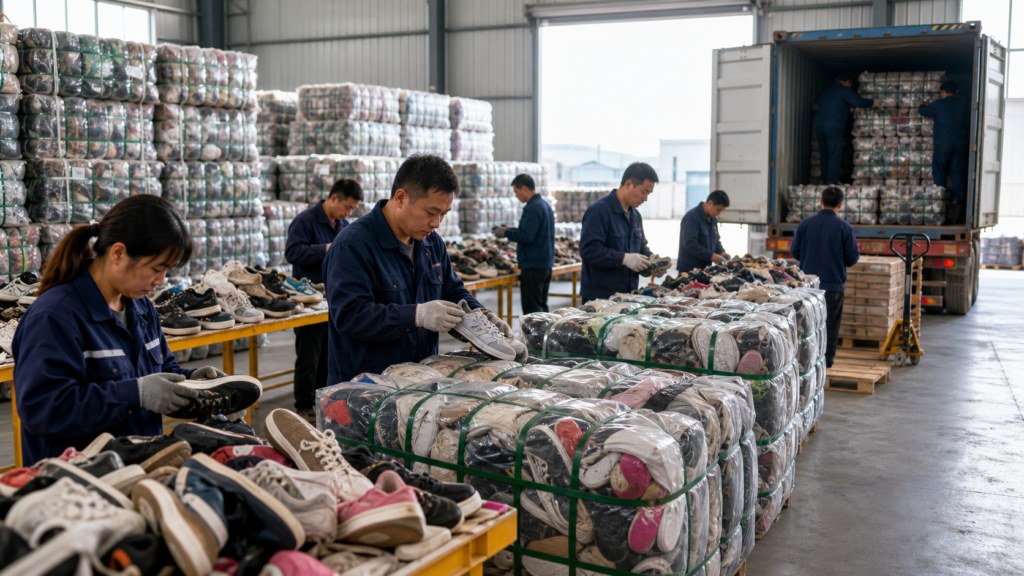
Used shoes bales is not only a search term. For wholesale buyers, it represents a real purchasing decision that affects resale margin, customer complaints, warehouse turnover, and cash flow. This guide is written for international importers, wholesalers, bale buyers, and container buyers who need a practical way to compare suppliers, request clear quotations, and reduce confusion before placing a bulk order.
Many buyers start by asking for the lowest price, but price alone rarely explains the full value of a bale or container. A more useful approach is to define the product category, expected grade, packing weight, sorting standard, loading plan, and evidence required before shipment. When those details are clear, the quotation becomes easier to compare and the supplier conversation becomes more efficient.
What Buyers Should Confirm First
Before discussing payment or shipping, prepare a simple sourcing brief. Write down your target market, resale channel, preferred categories, acceptable grade range, target bale weight, and whether you need clothing only or a mixed container with shoes, bags, and rags. This helps the supplier understand whether your order is for open-market resale, wholesale distribution, retail shops, or industrial use.
For Global buyers, product fit is especially important. In this market, daily-wear clothing, resale-ready footwear, practical bags, and industrial rags should be selected according to local demand. A supplier can only recommend a useful mix when the buyer explains the season, customer level, and categories that already sell well locally.
- Target buyer: importer, wholesaler, warehouse distributor, shop owner, or industrial rag buyer.
- Product focus: sneakers, sport shoes, sandals, slippers, leather shoes, school shoes, children shoes, and mixed footwear.
- Quality target: Grade A, mixed grade, premium selection, or budget resale categories.
- Packing needs: bale weight, label requirements, container mix, and loading sequence.
- Evidence required: photos, videos, packing lists, bale labels, and loading confirmation before shipment.
How to Evaluate Used shoes bales
The core of this topic is quality consistency. For used shoes, buyers should look beyond a single attractive photo and ask how the products are sorted every day. A good supplier conversation should explain raw material control, sorting categories, reject standards, packing method, and what information is included in the final packing list.
Ask the supplier to show real examples from the category you plan to buy. If you are buying used shoes, the most important checks include sole wear, heel damage, upper condition, odor, pair matching, size range, brand mix, and whether shoes are packed by category or mixed together. These details are more useful than a broad statement such as “good quality” because they show whether the supplier understands the resale conditions in your market.
Grade and Sorting Questions
Grade names can vary between suppliers, so buyers should not assume that one supplier’s Grade A means the same thing as another supplier’s Grade A. Ask what defects are removed, what level of wear is acceptable, whether items are sorted by category, and whether shoes, bags, or clothing are mixed in the same order. The goal is not to force every supplier to use the same words; the goal is to make the real product standard visible.
When possible, request short videos from the sorting area, sample bale opening videos, and photos of packed goods waiting for loading. These materials help you compare the quotation with the actual product condition. They also create a record that can be checked again before shipment.
Quotation Details That Prevent Misunderstanding
A useful quotation should include more than a total amount. It should show product category, grade, packing weight, estimated bale count, container mix, currency, payment terms, loading port, and what documents or photos will be provided before shipment. If the order contains multiple categories, ask the supplier to separate each product line clearly.
Buyers often ask for exact online prices, but used goods can change with raw material availability, category mix, grade, and packing requirements. A better method is to send a structured inquiry and request a current quotation. You can review YIKAO’s used clothing pricing guidance to understand which factors normally affect a bulk quote.
- Ask whether the quoted goods are sorted, semi-sorted, or mixed.
- Confirm bale weight and whether it can be adjusted for your warehouse handling.
- Request category names that match your local resale language.
- Confirm whether loading photos and packing lists are included.
- Check whether clothing, shoes, bags, or rags can be combined in one container.
Container Planning for Wholesale Orders
For container buyers, the product mix should be planned before production or packing begins. A balanced order might include a core clothing category, one or two supporting categories, and add-on products such as used shoes or used bags. The exact mix depends on your customers, storage space, unloading method, and resale season.
If this is your first order, avoid making the container too complicated. Choose categories that are easy for your team to sell and inspect. For experienced buyers, a mixed strategy can help serve different customer groups, but it requires clearer labels, better packing lists, and more disciplined loading records.
YIKAO buyers can review the main used clothing bales, used shoes, and used bags pages when preparing a product list. These internal category pages help translate a general inquiry into a more specific quotation request.
Supplier Comparison Checklist
When comparing suppliers, do not compare only the first quoted number. Compare communication speed, category clarity, evidence quality, packing discipline, and willingness to answer detailed questions. A supplier that gives clear category information can be easier to work with than a supplier that gives a vague low quote with no supporting details.
- Does the supplier explain the product mix in buyer-friendly language?
- Can the supplier provide photos or videos related to your requested category?
- Are grade terms explained with practical defect examples?
- Is the quotation separated by product, bale weight, and packing method?
- Can the supplier show loading evidence before the container is closed?
Common Buyer Mistakes
The first mistake is sending only one sentence such as “send best price.” This usually leads to a generic reply because the supplier does not know your product, grade, market, or container plan. The second mistake is comparing suppliers without matching the same category and grade. A cheaper quote may describe a different product mix, lower sorting level, or different packing requirement.
The third mistake is waiting until after payment to ask for inspection evidence. It is better to agree in advance what photos, videos, packing lists, and loading records will be provided. Clear expectations protect both sides and reduce unnecessary disputes.
FAQ About Used shoes bales
How should I start an inquiry?
Send your country, target category, preferred grade, estimated order size, bale weight request, and resale channel. If you already import used goods, include the categories that sell best in your market.
Should I choose the lowest quotation?
Not automatically. Compare the product mix, sorting standard, packing method, and evidence included with the quote. A low price with unclear quality can create higher resale risk.
Can I mix clothing, shoes, bags, and rags in one container?
Many buyers plan mixed containers, but the loading sequence and category labels should be confirmed before shipment. Mixed orders need clear packing lists so the warehouse can unload and distribute efficiently.
What evidence should I request before shipment?
Ask for category photos, short videos, bale labels, packing list details, and container-loading photos. The evidence should match the exact product category and grade in your quotation.
How do I get an accurate quotation?
Prepare a product list and send it through the contact page or WhatsApp. Include your market, category mix, expected grade, and whether you are planning a trial order or full container.
Request a Wholesale Quotation
If you are comparing used shoes bales for wholesale resale, contact YIKAO with your product list, target market, and container plan. Our team can help you review category options, packing details, and quotation factors before you confirm an order.
Request Product Recommendations
Send YIKAO Rewear Supply your destination market, target product categories and estimated quantity. Our team can help you prepare a practical wholesale inquiry for used clothing bales, used shoes, used bags or mixed rags. Use the contact page or request a current catalog through the pricing page.