
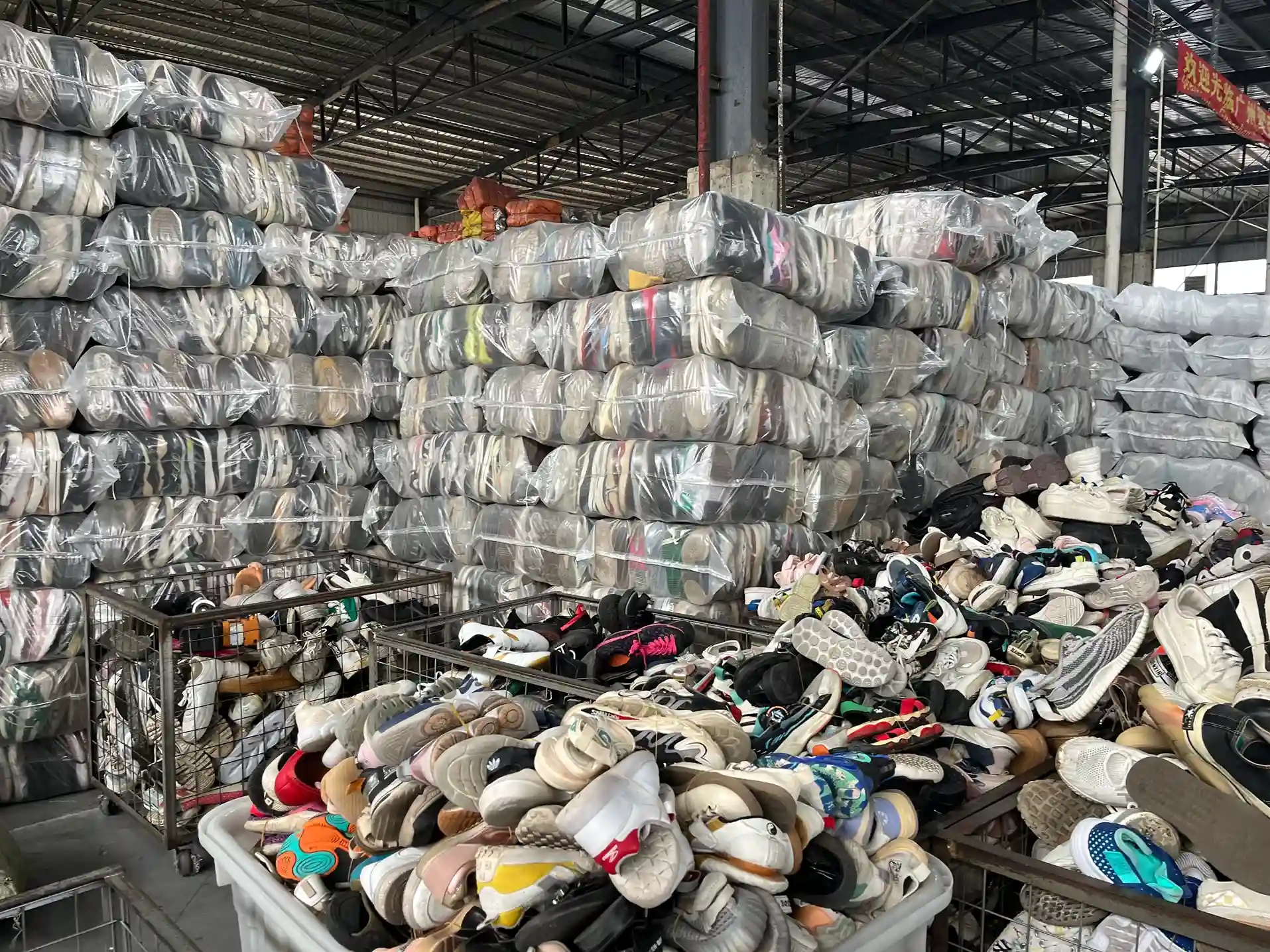
Choosing a used shoes bales supplier in China is not only about finding the lowest quote. African importers usually need a supplier that can match pairs correctly, remove heavy defects, pack shoes securely, and keep bale quality stable from one container to the next. That is what protects resale margin in open markets, wholesale shops, and mixed retail channels.
Search results for this topic are dominated by supplier pages, category pages, and buyer guides. That tells us the main search intent is commercial investigation: buyers are actively comparing a second hand shoes supplier, checking grade standards, and deciding who can support repeat wholesale orders.
1. Start with your local resale market before asking for a quote
A supplier can only recommend the right program if you describe the market clearly. In many African cities, different channels prefer different shoe mixes. Sports shoes, casual pairs, children’s shoes, and practical daily footwear do not move at the same speed or price.
- Mass-market stalls often need mixed practical footwear with broad size coverage.
- Urban resale shops may prefer cleaner fashion pairs and more branded sneakers.
- School and family channels usually need durable kids’ and everyday shoes.
- Budget-focused buyers may accept more mixed grades if local resorting capacity is strong.
Before you request wholesale used shoes China pricing, define your destination country, climate, customer income level, and preferred product mix. A serious supplier should use that information to recommend a realistic bale plan instead of giving a vague one-line price.
2. Ask how pairs are matched and defects are removed
Pair matching is one of the first issues buyers should check. A bale with many single shoes, badly mismatched sizes, cracked soles, or mold damage creates immediate losses after arrival. Reliable suppliers should explain how shoes are sorted, matched, inspected, and rejected before packing.
- Are left and right shoes matched by size and style before baling?
- Are broken soles, severe stains, mold, and wet shoes removed?
- Are shoes separated by adult, kids, sports, casual, or mixed categories?
- Can the supplier share current bale photos, sorting photos, or loading photos?
For buyers comparing a used shoes for Africa wholesale program, this step matters more than broad marketing claims. Consistent defect control usually has a bigger effect on resale value than a small difference in FOB price.
3. Compare grade A, mixed, and category-specific shoe bales
Not every market needs the same quality level. Some buyers want grade A used shoes bales with cleaner appearance and easier retail turnover. Others prefer mixed used shoes bales because they can re-sort locally and cover more price points. The right choice depends on your resale model.
When comparing offers, ask each supplier to define the grade in practical terms. What is included? What is excluded? Are branded shoes mixed with ordinary shoes? Are children’s shoes packed separately? Does the supplier offer women-focused, men-focused, sports-focused, or all-mix bales? Clear answers reduce the risk of buying a category that does not fit your buyers.
4. Check bale weight, pair count, and container loading
Buyers often ask for price per kilogram, but shoe business planning also depends on approximate pair count, bale density, and loading efficiency. A low quoted price can still underperform if bale composition is weak or the shipment is packed poorly.
- Confirm bale weight options and whether the weight is checked before loading.
- Ask for the expected pair range per bale by product type.
- Check whether mixed categories are marked clearly on each bale.
- Confirm whether the order is planned for a 20 ft or 40 ft container.
- Request loading photos or videos for shipment records.
If you are adding shoes to a mixed order with clothing or bags, review YIKAO’s shipping support in advance so the packing plan is aligned with the full container program.
5. Review export documents and repeat-order support
A dependable used shoes bales supplier in China should also support the export process. Buyers should confirm commercial invoice, packing list, bill of lading coordination, and any destination-specific guidance before payment is finalized.
Repeat-order support matters as much as the first container. A supplier that keeps product notes, remembers your preferred grade, and responds quickly to market feedback is more useful than a supplier that only pushes stock. You can also compare shoe sorting standards with YIKAO’s quality grading process and product options on the used shoes page.
Buyer checklist before placing a used shoes order
- Define destination country, target customer, and preferred shoe categories.
- Ask how pairs are matched and which defects are rejected.
- Compare grade definitions, not just grade names.
- Confirm bale weight, estimated pair count, and packing marks.
- Review container plan, loading proof, and export documents.
- Start with a program that your resale team can evaluate and repeat.
FAQ
What should I ask a used shoes supplier before ordering?
Ask about grade rules, pair matching, rejected defects, bale weight, approximate pair count, product mix, loading proof, and export documents. These details tell you more than a price list alone.
Are mixed used shoes bales better than grade A bales?
Not always. Mixed bales can work well for buyers with strong local sorting and several price bands. Grade A bales are usually easier to retail quickly, but they may cost more. The better option depends on your market and team capacity.
How do African buyers reduce risk on a first shoe container?
Reduce risk by choosing a clearly defined category mix, confirming grade standards in writing, checking bale and loading photos, and comparing landed value instead of FOB price only. A clear inquiry also helps the supplier quote more accurately.
Next step
If you are comparing suppliers for your next shoe order, review YIKAO’s used shoes categories, check the packing and shipping workflow, or send your inquiry with destination market, preferred grade, and container size.
Reference context: UNEP on fashion and textile waste, European Environment Agency on used textile exports, UN Comtrade trade data platform, and CUTS study on second-hand clothes and shoes in East Africa.